Overview
This fragment collects my first sustained attempt to understand linear logic beyond the slogan that it treats propositions as resources. The route is deliberately broad: from game mechanics and storytelling to Schopenhauer-style debate, ludics, and the geometry of interaction.
The guiding contrast is between static logic and interactive logic. Instead of asking only whether a statement is true, linear logic asks how assumptions are consumed, transformed, duplicated, or withheld. The fragment is therefore both a learning note and a conceptual experiment: it tests whether a technical logical system can illuminate narrative structure and human interaction without reducing them to mere metaphor.
Part I: "The Signifier Chain Without the Signifier"
Reflections on Dr. Peng’s First Theme
Dr. Peng’s cryptic observation regarding the "signifier chain without the signifier" forces us to confront the structuralist heritage of modern logic. In the context of Jean-Yves Girard’s Ludics and the diagrams we have analyzed, this statement acts as a methodological razor.
In classical logic (and traditional semantics), we are often obsessed with the "Signified"—the semantic content or the "truth value" residing behind the symbol. We ask, "Is true?" assuming points to a platonic reality. However, the move toward Linear Logic and Ludics represents a radical shift. We are no longer observing the object (the signifier) but the location and the link (the chain).
As seen in the argumentation analysis (Image 1), the specific content of the debate (whether the child has bad habits) is secondary to the form of the interaction. The "signifier" is emptied of its ontic weight; what remains is its "valency"—its ability to connect, oppose, and transform. The "chain" is the sequence of focalized actions in a proof. In Ludics, formulas are abandoned in favor of "Loci" (addresses). We do not prove a formula; we interact with a design at a specific address.
This echoes Lacan’s notion of the sliding chain of signifiers, but here it is rigorous mathematics: the meaning of a logical operator is not defined by a truth table, but by its geometric interaction with its dual. The "chain" is the trajectory of the cut-elimination procedure, a pure movement of syntax that generates meaning through friction, without ever needing a pre-existing "signified" to ground it.
Part II: Linear Logic as Game, Narrative, and Interaction
Reflections on Dr. Peng’s Second Theme
"I thought there wasn't much to Linear Logic, but it opened a new world... Logic has ascended to the level of interaction, or rather, the Game." — Dr. Keyao Peng
Dr. Peng’s second commentary serves as the backbone of my current research. The realization that logic is not a static description of the world, but a set of rules for changing it, bridges the gap between my interest in game design and formal systems.
2.1 The Narrative as a Resource Pipeline (The Three Little Pigs)
One of the most striking applications of this logic is the ability to formalize narrative causality not as a sequence of distinct events, but as a chemical reaction of resources.
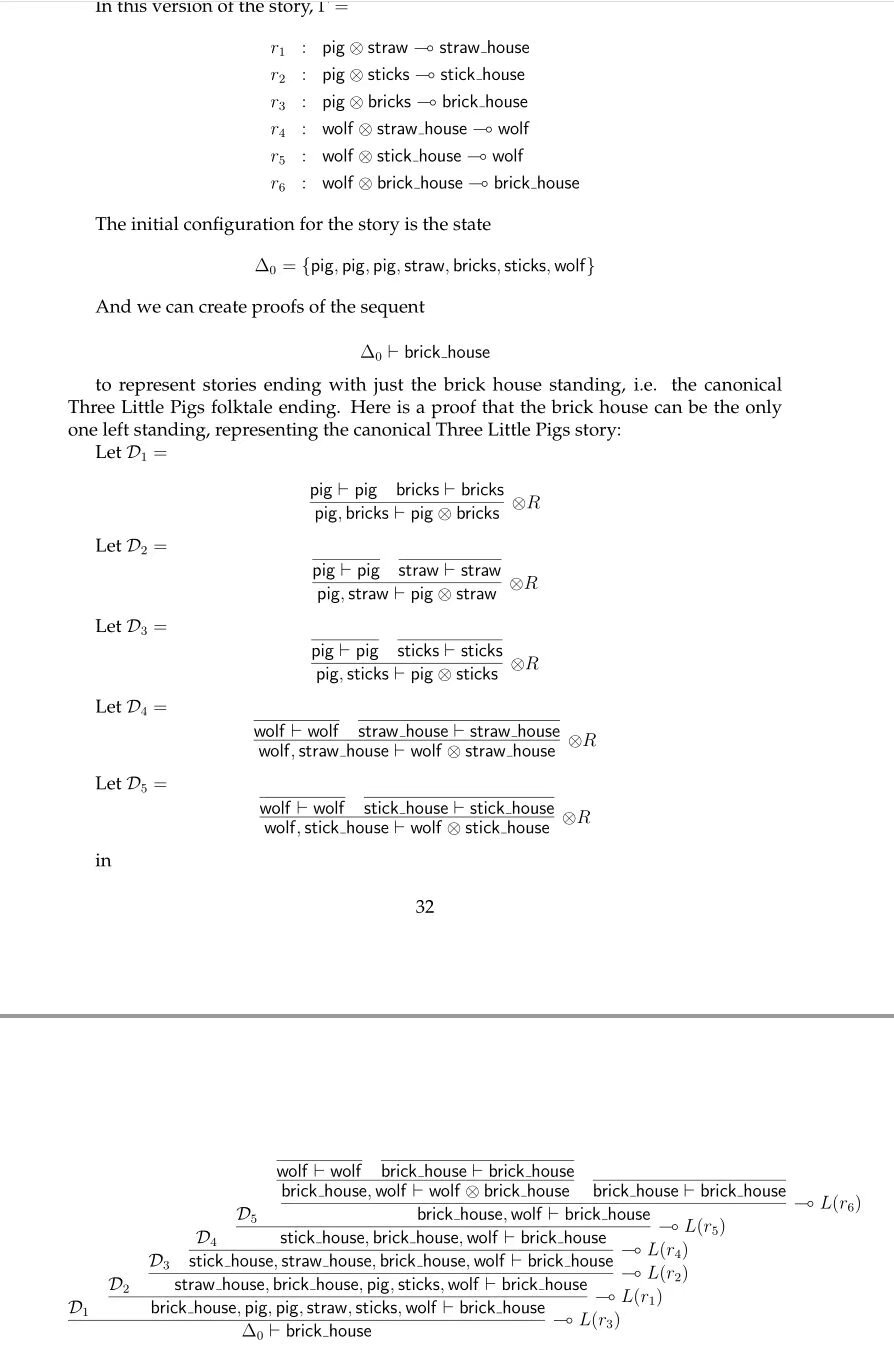
Figure 1: The Sequent Calculus of Narrative Construction
Analysis of Figure 1: The image above demonstrates a proof-search interpretation of the "Three Little Pigs" folktale. Here, the story is encoded in Linear Logic, specifically using the multiplicative conjunction () and linear implication ().
-
The Logic of Conservation: In classical logic, if I have a premise , I can use it infinite times (). In the story of the Three Little Pigs, materials are finite. A pig cannot simultaneously build a straw house and remain an idle pig. Linear Logic captures this perfectly.
- Rule : .
- This implies that to create a
straw_house, the resourcespigandstrawmust be consumed. They are no longer available in the context after the transition.
-
The Proof Tree as Storyboard: The derivation tree at the bottom of Figure 1 ( through ) is not just a mathematical proof of validity; it is the timeline of the story.
- The "Initial Configuration" () is the set of actors and props: .
- The "Sequent" to be proven is .
- The proof search represents the plot. The wolf interacts (via "cuts" or logical inferences) with the straw house (), effectively destroying the house but preserving the wolf.
- The final state (the bottom of the tree) is the canonical ending where only the brick house stands.
This confirms Dr. Peng's insight: Linear logic's resource semantics is the language of material processing pipelines. Whether it is an industrial assembly line or the plot points of a fable, the logic remains valid: is the fundamental unit of change.
2.2 Dialectics: The Art of Winning Controversies (Schopenhauer & Ludics)
Dr. Peng noted that logic has moved "from absolute unary to subject-object duality, from proof to dialectic." This is explicitly visualized in the analysis of Schopenhauer’s stratagems through the lens of Ludics.
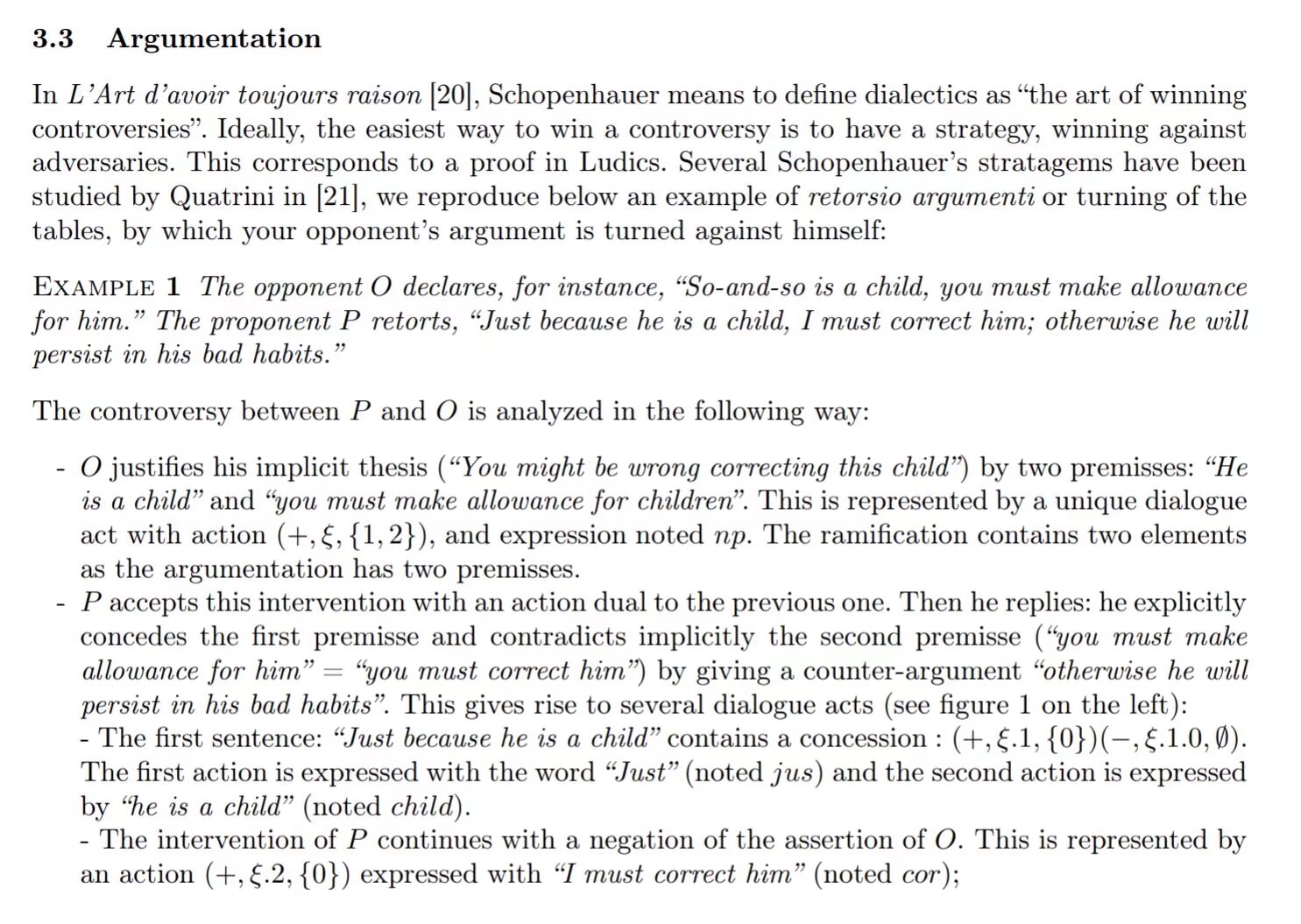
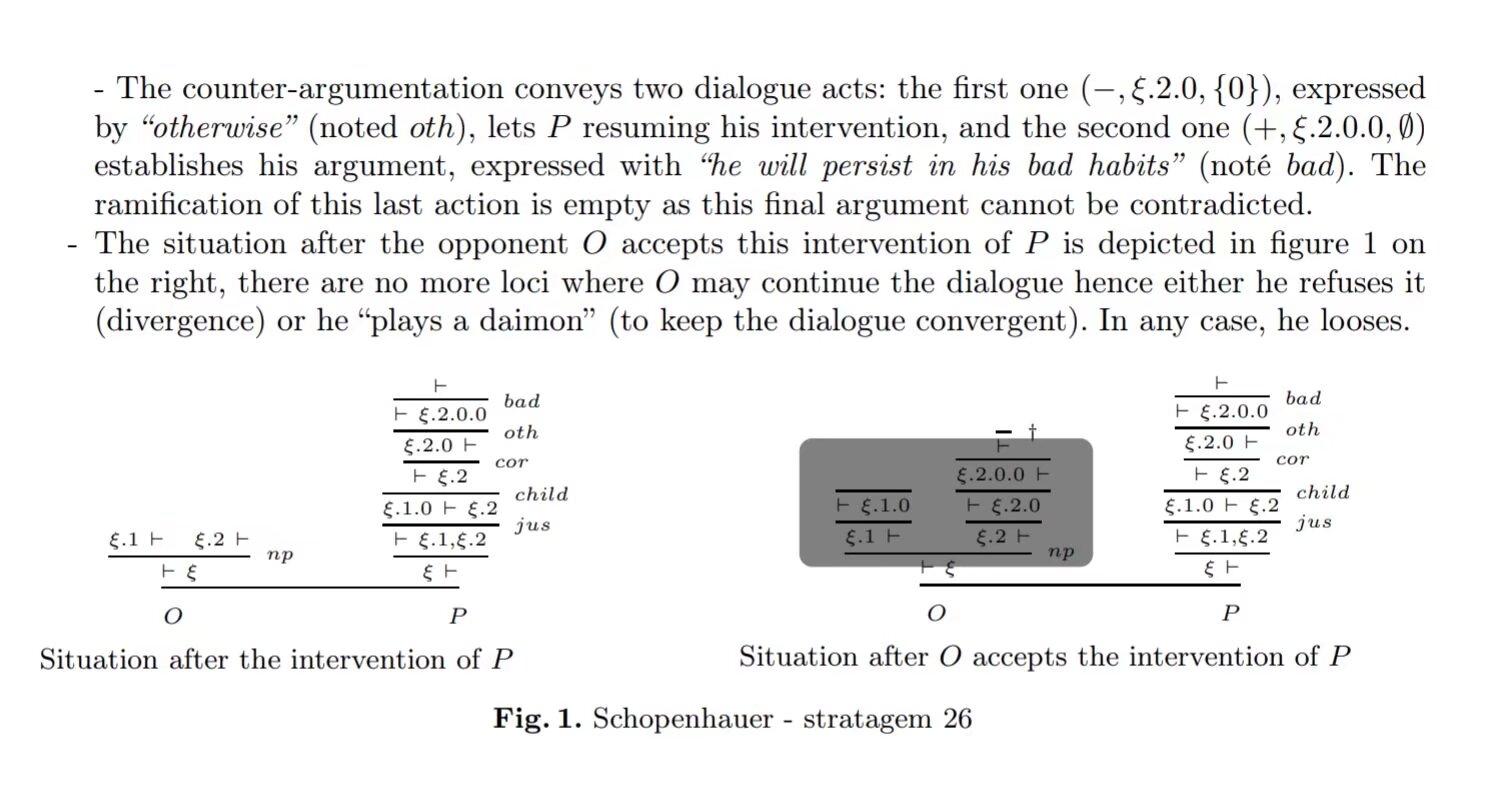
Figure 2: Formalizing 'Retorsio Argumenti' in Dialogue Acts
Analysis of Figure 2: This fragment references Schopenhauer’s The Art of Being Right (L'Art d'avoir toujours raison), interpreting dialectics as "the art of winning controversies."
- Logic as Warfare: In standard logic, a proof is a static object. In Ludics (a development of Linear Logic), a proof is a strategy against a counter-proof. The "Proponent" () tries to establish a thesis, while the "Opponent" () tries to find a flaw.
- The Mechanism of Retorsio: The text analyzes a specific rhetorical move: retorsio argumenti (turning the tables).
- Opponent (): "He is a child (), so you must be lenient ()."
- Proponent (): "Because he is a child (), I must correct him, or he will keep bad habits (Not-)."
- The Formalization: The text maps this natural language exchange into "Dialogue Acts" with specific polarities ():
- The concession "Just because he is a child" is a positive action accepting the premise.
- The counter-argument is the dual action.
- The notation represents the ramification of the argument. The debate is a tree of possibilities; winning the argument corresponds to finding a "winning strategy" in the game-theoretical sense—a path through the tree that handles every possible move by the opponent.
This validates the view of logic as interaction. Truth is not a property of the sentence "The child must be corrected"; truth is the existence of a winning strategy for in the debate game defined by these rules.
2.3 The Geometry of Interaction (Mellies' Topologies)
Finally, we arrive at the most abstract representation: the topological view of logical interaction.
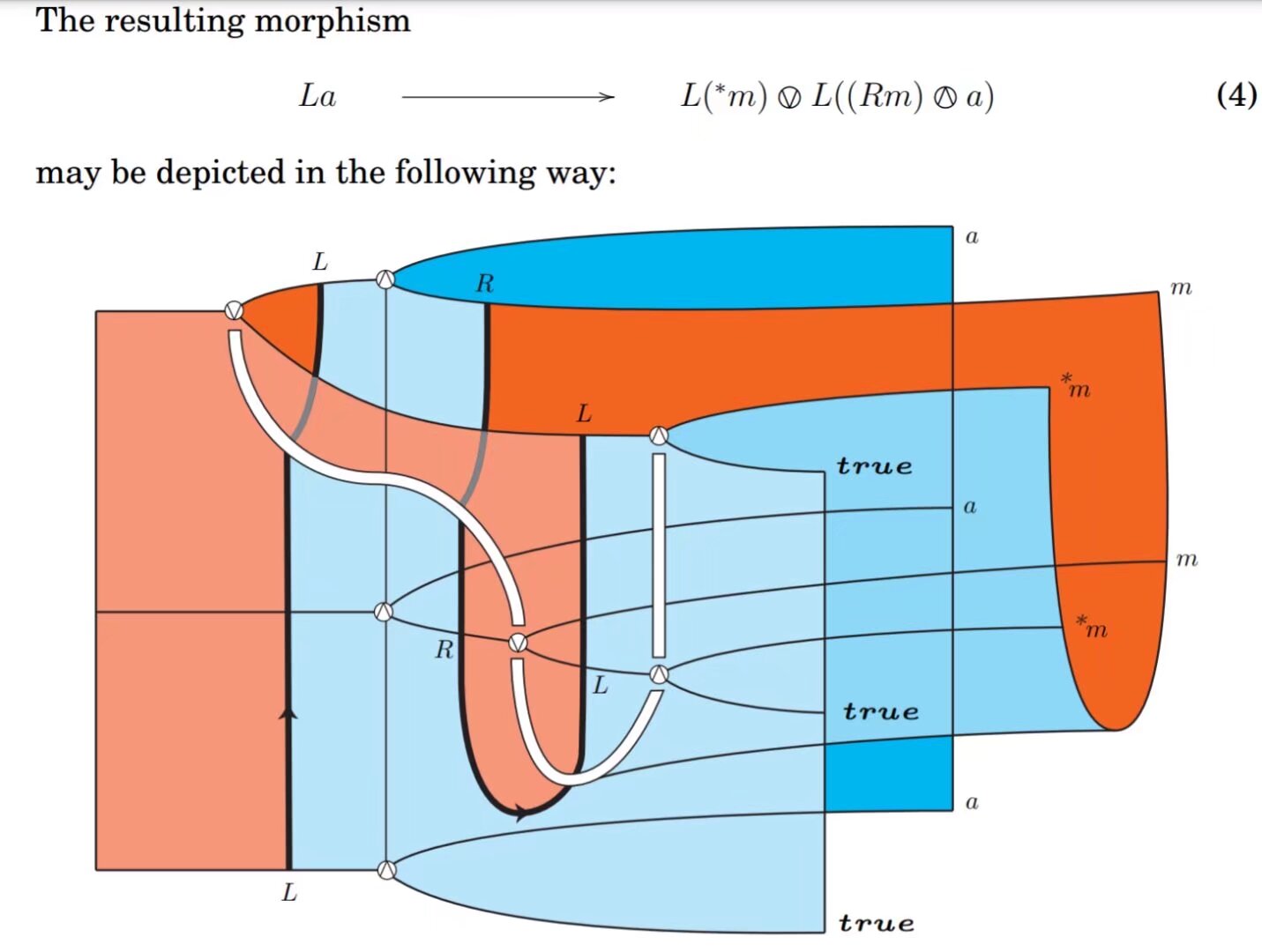
Figure 3: String Diagrams and the Flow of Logic
Analysis of Figure 3: This diagram, likely derived from the work of Paul-André Melliès (a student of Girard), visualizes a "morphism" in a logical category (likely a -autonomous category or a dialogue category).
- Feynman Diagrams for Logic: Dr. Peng joked that "human interaction becomes like Feynman diagrams." This is literally true in Game Semantics. The ribbons represent the trajectory of information (or control) flow between the Player and the Opponent.
- The Structure:
- The diagram depicts a transformation .
- The colors (Orange/Red vs. Blue) likely represent Polarity: Positive (Player/Proponent) vs. Negative (Opponent).
- The connections (the "wires") show how input types are routed to output types.
- The "clasps" or nodes where ribbons split or join represent logical connectives (Tensor or Par ).
- Topological Invariants: The power of this representation is that logical equivalence becomes topological deformation. If you can stretch or slide one ribbon diagram into another without cutting it, the two logical proofs are effectively "the same" (they have the same normal form). This is the Geometry of Interaction: logic is not about symbols on a line, but about the topological linkage of processes in space.
Part III: Comprehensive Learning Notes
Subject: Linear Logic, Game Semantics, and the Reconstruction of Meaning
Based on the synthesis of Dr. Peng's themes and the visual artifacts above, I have compiled the following detailed study notes. These notes aim to deconstruct the "new world" of logic that Dr. Peng referred to—moving from simple categorization to complex interaction.
1. The Foundation: From Truth to Resource
Linear Logic (LL), introduced by Jean-Yves Girard in 1987, is not merely a "logic without Excluded Middle" (like Intuitionism); it is a logic of action.
-
The Decomposition of Implication: In classical logic, is coarse. It combines the ability to use (consumption) with the ability to repeat (structural rule of Contraction) and ignore (structural rule of Weakening). LL decomposes this into: Where "!" (Why Not / Bang) is the exponential modality that allows indefinite reuse. The core arrow, (Lollipop), is strictly resource-sensitive.
-
The Two Conjunctions (Choice vs. Co-existence): LL resolves the ambiguity of "And":
- Multiplicative "And" ( - Tensor): "I have and I have simultaneously." ($10 implies I can buy a Coke AND a Burger).
- Narrative Application: The
pigand thestrawin Figure 1 are tensored (). They are both present and consumed together.
- Narrative Application: The
- Additive "And" ( - With): "I have a choice between and ." ($10 implies I can buy a Coke OR a Burger, but not both).
- Game Application: The Opponent offers a choice of attack. I must be ready to defend against A and defend against B, but only one will actually happen in a single play-through.
- Multiplicative "And" ( - Tensor): "I have and I have simultaneously." ($10 implies I can buy a Coke AND a Burger).
2. The Interaction: Logic as a Game
Dr. Peng mentioned that logic has become a "2-player game." This is formalized in Game Semantics (Hyland, Ong, Abramsky, etc.).
-
Proponent vs. Opponent: Every logical formula is viewed as a game.
- Propositions are games.
- Proofs are strategies for the Proponent.
- Validity means the Proponent has a winning strategy (can always win regardless of Opponent's moves).
-
The Dialectical Turn: As seen in the Schopenhauer example (Figure 2), this models real-world argumentation. A logical fallacy is simply a bad strategy that allows the Opponent to trap you in a contradiction.
- The "Cut" Rule: In Game Semantics, the "Cut" (combining two proofs) corresponds to letting two strategies play against each other. The "Cut Elimination" process is the actual execution of the game—the dialogue that ensues until a winner is determined.
3. Ludics: The Location of Meaning
Dr. Peng’s reference to the "Signifier chain" leads us to Ludics, Girard's attempt to rebuild logic without the "semantic prejudice."
-
Loci (Locations) instead of Formulas: In Ludics, we don't say "Proposition A implies Proposition B." We say "Design at address interacts with Design at address ." This is radical because it removes the "meaning" of the proposition. It doesn't matter what the pig or the straw is. What matters is their address in the memory and the rules governing their interaction.
-
Interaction as the Primitive: Usually, we define syntax (grammar) and semantics (meaning) separately. In Ludics, semantics is the interaction of syntax with itself.
- Two designs are "orthogonal" (roughly, compatible) if their interaction terminates properly.
- The "meaning" or "type" of a design is simply the set of all designs that interact well with it. This is the Behavioral Semantics.
4. Transcendental Syntax & The Closure of Negation
Dr. Peng’s final point regarding Girard’s Transcendental Syntax is the most profound.
-
The Death of the "Real": Traditional logic assumes a "Real world" outside of logic that we are trying to describe. Girard argues that logic should be self-contained. The "Real" is not an external object, but the result of the interaction between the Subject (Proponent) and the Object (Opponent).
-
Negation as Definition: "In this sense, the proposition is defined by its negation." This is a Cybernetic or Hegel-influenced view. I do not know what is by looking at . I know what is by looking at everything that contradicts .
- .
- The "Closure of Negation": The system is complete because every entity is defined solely by how it interacts with its environment (its dual).
-
Negation of Negation: Dr. Peng notes, "Negation of negation completes the argument closure." In the Schopenhauer example, the Proponent wins not by stating a fact, but by negating the Opponent's negation.
- Opponent: "You must make allowance." (Thesis)
- Proponent: "I must correct him." (Antithesis / Negation)
- Synthesis: The strategy that successfully defends the correction against the allowance plea.
5. Application: From Narrative to Social Relations
Dr. Peng’s insight extends these logical structures to Production Relations and Narrative Generation.
-
Narrative Generation: Using the Linear Logic structure (Figure 1), we can build an "Automatic Storyteller."
- State: A multiset of resources ().
- Events: Linear implications () that consume resources and produce new ones.
- Plot: The proof tree.
- Conflict: The competition for limited resources (e.g., the Wolf wants to consume the Pig, the Pig wants to build a House). If resources are limited, these branches are mutually exclusive (Additive conjunction), requiring a choice (branching narrative).
-
Social/Marxist Analysis: The "Feynman Diagram" view of human interaction (Figure 3) suggests a new sociology. Interactions are not just people talking; they are exchanges of logical types/resources.
- Alienation could be modeled as a failure of orthogonality—an interaction that diverges or fails to terminate.
- Production is the tensor product ().
- Consumption is the linear implication (). We can model an economy not just numerically, but logically, proving whether a certain distribution of resources (premises) can actually lead to a desired societal outcome (conclusion) without "magic" (Weakening/Contraction).
Conclusion: The New Logic
My time studying these fragments has shifted my perspective irrevocably. Logic is no longer the dry study of tautologies (). It is the vibrant, geometric, and game-theoretical study of information flow.
Whether we are:
- Analyzing a debate strategy using Ludics (Figure 2),
- Visualizing the topology of a conversation using String Diagrams (Figure 3),
- Or generating a folktale using Linear Sequent Calculus (Figure 1),
The underlying principle remains the same: Structure is defined by Interaction. The "Signifier" may be empty, but the "Chain"—the web of dualities, negations, and connections—is where meaning, story, and reality are generated.
As Dr. Peng suggested, the world is a game. But it is not a game of chance; it is a game of Logic. And we are just beginning to learn the rules.