The Transgressive Gaze and Symbolic Tragedy: Actaeon's Myth in a Lacanian Framework
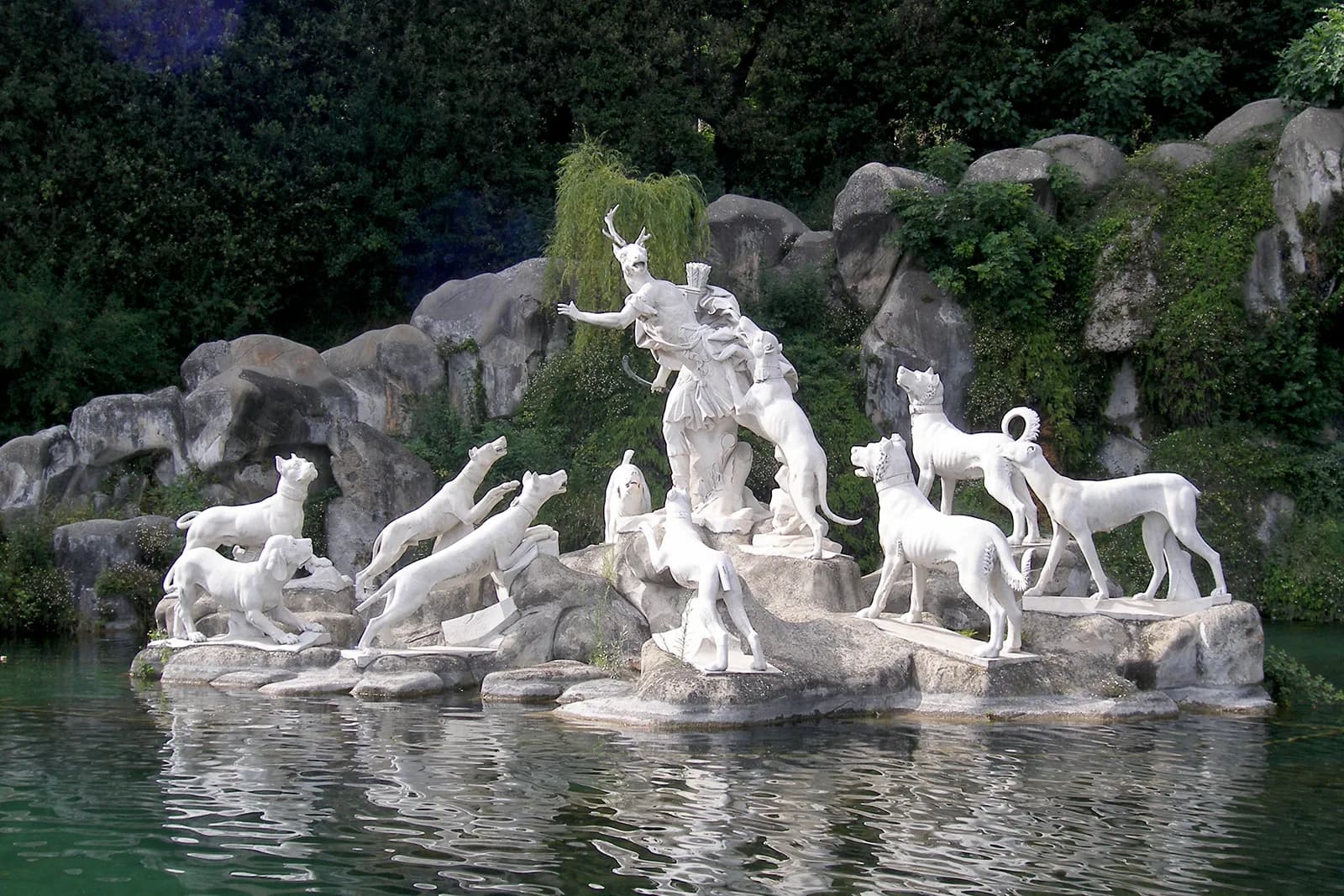
In Robert Graves’s reconstruction of the myth of Artemis, Actaeon accidentally glimpses the goddess bathing and is transformed into a stag, only to be torn apart by his own hounds. This tragedy not only embodies ancient taboos but also serves as a powerful allegory for Lacanian concepts of the gaze, desire, and the symbolic order. This paper reinterprets the myth of Actaeon through the lens of Lacan’s theory of the gaze, exploring its deep structure and its contemporary resonance in the digital age.
The Transgressive Gaze and Symbolic Tragedy: Actaeon's Myth in a Lacanian Framework
In Robert Graves’s reconstruction of the myth of Artemis, Actaeon accidentally glimpses the goddess bathing and is transformed into a stag, only to be torn apart by his own hounds. This tragedy not only embodies ancient taboos but also serves as a powerful allegory for Lacanian concepts of the gaze, desire, and the symbolic order. This paper reinterprets the myth of Actaeon through the lens of Lacan’s theory of the gaze, exploring its deep structure and its contemporary resonance in the digital age.
I. The Dual Gaze Structure of the Mythical Narrative
(1) The Primal Scene as a Trauma of the Real
Graves’s account of the encounter in The Greek Myths emphasises the spatial isolation of the setting: “a secret pool surrounded by immemorial cypresses, its surface veiled with steam.” This enclosed and secluded space constitutes what Lacan calls the space of das Ding (the Thing)—a residue of the Real.
Actaeon’s intrusion breaks the fragile boundary between the Imaginary and the Real. His entry is accidental, not deliberate voyeurism, which reinforces its metaphorical nature as the subject’s traumatic encounter with the Real. The detail that “the rising steam suddenly froze” marks the moment when the symbolic order (represented by the divine law of Artemis) rigidifies in response to the irruption of the Real.
(2) The Gaze as the Signifier of Desire
In his Four Fundamental Concepts of Psychoanalysis, Lacan states: “The gaze is not the look of the subject, but the gaze of the Other.” The turning point in Actaeon’s story is not his seeing Artemis naked, but Artemis turning back to look at him.
“The icy glint of her bent bow” is a striking image in Graves’s narrative, materialising the gaze. At that instant, Actaeon is reduced from a seeing subject to an object seen. His subjectivity is entirely captured and alienated by the goddess’s look, prefiguring the subsequent dissolution of his identity.
II. The Punitive Mechanism of Symbolic Violence
(1) The Sprouting Antlers: The Violent Inscription of the Symbolic
“Antlers thrust from his temples, his skin split, his limbs stretched”—the metamorphosis is not a natural biological process but a ritual of symbolic inscription. Lacan holds that the subject must undergo “castration” to enter the linguistic order, i.e., accept the cutting imposed by the symbolic law. Actaeon, however, suffers not a symbolic castration but an excessive marking by the Real: he is branded with non-human features, thereby excluded from the human symbolic order.
The antlers are at once the evidence of his transgressive gaze and the verdict inscribed on his body by the big Other (the goddess / the symbolic order).
(2) The Devouring Hounds: The Reversal of the Drive and the Loss of objet petit a
Actaeon is ultimately killed by his own hounds. From a psychoanalytic perspective, this scene carries a twofold metaphor:
- Reversal of the drive: The hounds, once extensions of Actaeon’s control over the external world (the hunting drive), turn against him after his symbolic reconfiguration (his transformation into a stag). This exemplifies Freud’s “death drive”—the drive’s shift from the external world back toward the subject himself.
- Loss of objet petit a: The hounds symbolise the set of objects that once constituted his desires. When the subject is marked as prey by the symbolic order, he loses his objet a (the leftover/cause of desire) and is ultimately consumed by desire itself.
III. The Contemporary Significance of Actaeon’s Tragedy from a Lacanian Perspective
(1) “To See Is to Possess” in the Age of Social Media
In the digital era, the violence of the gaze persists, albeit in more subtle forms.
On the one hand, social media fosters the illusion that “to see is to possess.” Users constantly view, screenshot, and collect so-called “useful content,” superficially possessing information but actually caught in the repetitive cycle of desire—precisely Lacan’s “metonymy of desire.”
On the other hand, every user is both a gazer (an Actaeon actively viewing others’ lives) and a “digital subject” liable to be marked by the symbolic system at any moment. When algorithms reduce us to data points and our digital footprints expose us to public scrutiny, we become modern Actaeons—branded by the symbolic order and vulnerable to being torn apart by the “hounds” of online violence.
(2) The Contemporary Reproduction of Visual Taboos
The mythical prohibition “Do not look” is essentially a strategy by which the big Other maintains the stability of the symbolic order. Today, this taboo is reconfigured by capital and power into visual barriers such as “paid viewing,” “members-only content,” and “no photography.”
Graves’s remark that Artemis “bathed only once every hundred years, when she shed her armour” exemplifies the narrative of scarcity that the symbolic system uses to regulate the rhythm of desire. Contemporary platforms create “scarce content” and “limited-time access,” perpetuating this ancient mechanism.
Conclusion: The Dilemma of Desire and the Tragedy of the Subject
Actaeon’s tragedy is not merely an echo of ancient myth; it is an allegory of the subject’s fundamental predicament within the symbolic order:
- If he gazes, he transgresses the symbolic taboo and incurs punishment;
- If he refrains from gazing, he loses his desire and falls into existential nullity.
This is an insoluble paradox. Lacan teaches us that the essence of desire is precisely the perpetual circumvention of this paradox. Actaeon’s being torn apart by his hounds may be a bloody revelation of this truth: in pursuing desire, the subject is ultimately devoured by desire itself.
The meaning of myth lies not in showing us how to avoid tragedy, but in making us see that we are always already caught within it.