From The Cloven Viscount: An Analysis of the Symbolization of the Body
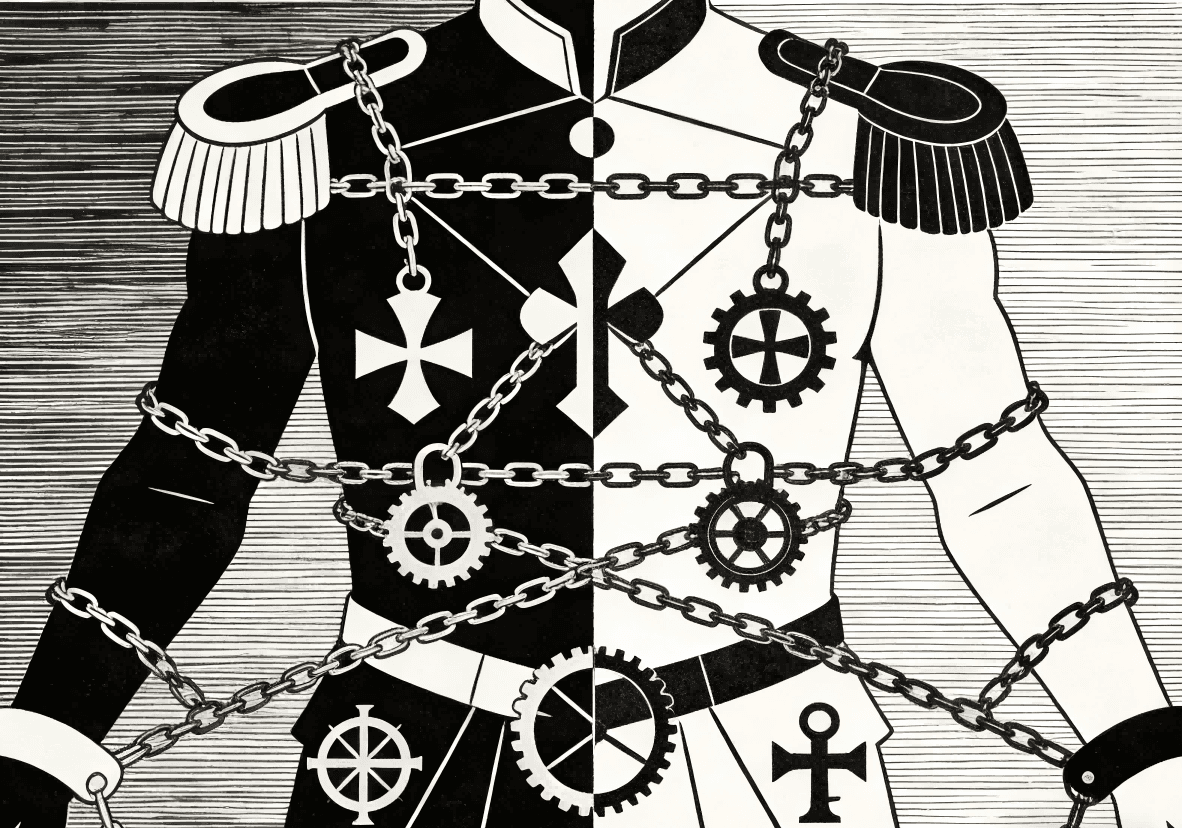
This essay analyzes Italo Calvino's novel The Cloven Viscount, exploring the symbolization of the body through the protagonist's division. It examines how power structures discipline the body, the inherent heterogeneity of human nature, and the path to wholeness through embracing contradictions, as embodied by the character Pamela.
From The Cloven Viscount: An Analysis of the Symbolization of the Body
In The Body, or the Grave of Signs, Jean Baudrillard pointed out: "The entire contemporary history of the body is the history of its demarcation, the network of signs and marks that have since covered it, divided it up, annihilated its difference and its radicality in order to organize it into a structural object of symbolic exchange, homologous to the sphere of objects." Surrounded by powerful discursive systems, the body often falls into a state of aphasia. In The Cloven Viscount (Il visconte dimezzato), Italo Calvino reflects deeply on this in a near-fable manner: on one hand, the novel demonstrates the discipline of the body by tyranny and institutions of power, which may be understood as an attempt to construct order; on the other hand, this very discipline gives rise to various deformed and incomplete personalities. The image of the "halved man" is the extreme manifestation of this paradox.
I. The Discipline of the Body by Religion and Politics
The protagonist, Viscount Medardo of Terralba, the son of the old Viscount, is introduced as a typical noble youth of the European feudal era. However, cannon fire in the war blasts him into two halves, initiating a dual cleavage of both body and soul. It is noteworthy that the body here becomes the direct object of power: the cold logic of feudal politics is already visible in the "resurrection" and accession of the Viscount. As a feudal lord, the Viscount possesses the absolute power of life and death over his subjects. As Michel Foucault stated, "In the classical age, man became the object and target of power." Under the rule of a sovereign, subjects must obey unconditionally; the body becomes a field for the display and punishment of power. In the novel, the onlookers of the torture scenes find them "extremely spectacular" while remaining "deliberately confused" by the precision of the instruments. This distorted psychology reveals the alienation of human nature through disciplinary power.
Beyond "prisons," spaces such as the "castle," the "Prato di Fungo," and even secluded "hermitages" serve as physical means for the exercise of power, maintaining hierarchy and subjugating the body—becoming indispensable links in political governance. Within this symbolic system, the body is generally aphasiac: soldiers become cannon fodder for the Sovereign and the Pope without complaint; women in the forest cemetery sacrifice their daughters' happiness to resist the Viscount; the devout are forced into reclusive hiding. Even Medardo himself, as the embodiment of power, has his body swallowed by symbols, reduced to the abstract existence of a "halved man." As Calvino himself remarked, the Medardo who is "entire" at the beginning is insignificant, and the "almost entire" Medardo at the end remains equally unknown—once the body is hollowed out by symbols, the distinction between wholeness and fragmentation loses its essence.
II. Heterogeneity of the Body Behind Discipline
On one hand, the symbolic system itself is incomplete; on the other hand, man himself is incomplete. The world in the novel, which "wanders alone, entwines with itself, destroys and repairs itself," is a portrayal of this state. Any system pursuing absolute unity will ultimately fall into disorder and self-struggle. The sky is "pasted together as tenuously as a pale, thin membrane," and everything is at odds with itself—man is precisely like this, fighting himself with knives in both hands. The eventual duel between the "Good" and "Evil" halves is the concentrated presentation of this paradox.
The novel through the core imagery of the "halved man," metaphors the divisive and reflexive nature of the world. Those who appear "normal" are, in fact, also halved, combating themselves from within. Therefore, the confession of Medardo’s half to Pamela carries universal significance: "It’s not only I, Pamela, who am a split being... You are too." Everyone struggles between life and death, and the boundaries between good and evil, right and wrong, are blurred and reversible at any moment. The carpenter Pietrochiodo cares about crafting ingenious torture devices, feeling both pride in his craftsmanship and deep remorse; the old Viscount once suppressed the people with the "cage" of power, but eventually locked himself in a birdcage, refusing to step out; Dr. Trelawney has no heart for healing, filled with loathing and fear toward humanity and its diseases. Together, these characters present the heterogeneity and internal contradictions of the body under discipline.
III. Escaping Semioticization: The Inspiration of Pamela
However, the theme of the novel is not merely a critique of this reflexivity, but a negation of the attempts by religion and politics to incorporate the world into a unified narrative. The diversity of things determines that they cannot be subsumed by a single discourse; difference and heterogeneity are the natural states of the world. "Pure evil and pure morality are equally inhuman"—only by simultaneously accommodating light and darkness, allowing morality and desire to coexist, and acknowledging the existence of contradictions, can one truly face the paradox.
On this point, Pamela provides the key to escaping the crisis of the semioticized body. Faced with the Viscount’s fanatical pursuit, she resists without yielding; faced with the gentle discipline of the "angelic" role, she remains indifferent, refusing to be a molded "ideal." Through her own existence, she demonstrates a natural and untamed soul, possessing both a calm acceptance of contradictions and a freedom that disdains discipline. In the end, her role in helping the Viscount return to "wholeness" suggests that only by accepting fragmentation and embracing opposites can we possibly approach true integrity.
"Know thyself"—how difficult that is! Yet, through the allegory of the "halved man," Calvino reminds us: true wholeness does not consist in the elimination of fragmentation, but in learning to coexist with it.