When the Homeland Becomes the Kingdom of the Hunger Angel: The Alienation of Heimat in Herta Müller’s The Hunger Angel
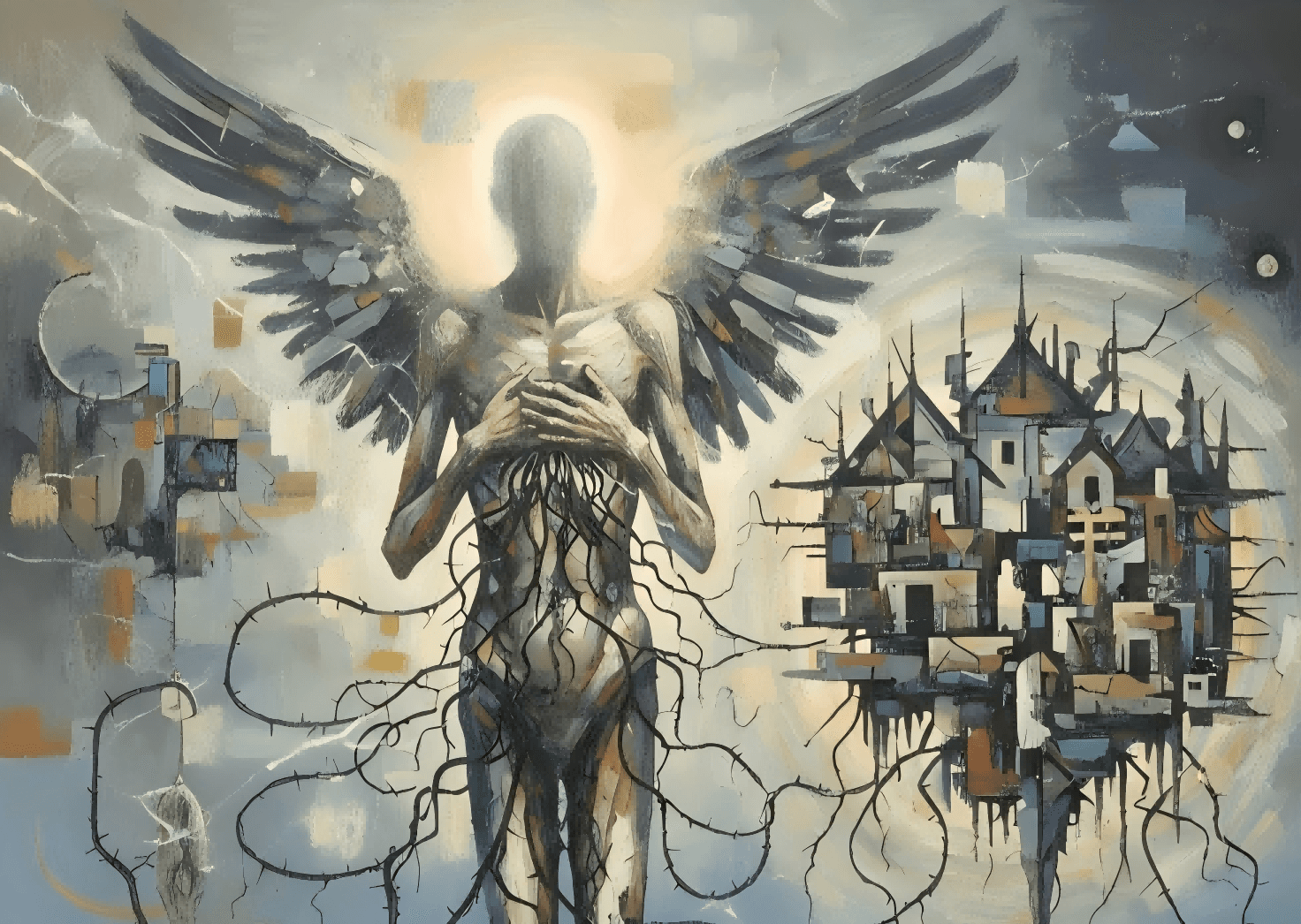
Herta Müller's The Hunger Angel, a key work for her Nobel Prize, controversially depicts post-WWII Soviet labor camps from the perspective of a 'non-eyewitness.' As a Romanian-German minority member, Müller portrays the trauma of her people, earning praise for depicting the 'landscape of the dispossessed' and exploring a displaced person's confusion, critique, and quest for homeland.
When the Homeland Becomes the Kingdom of the Hunger Angel: The Alienation of Heimat in Herta Müller’s The Hunger Angel
The Hunger Angel (Atemschaukel) is a seminal work that contributed significantly to Herta Müller’s Nobel Prize in Literature. However, it also sparked controversy: she wrote about the trauma of post-WWII Soviet labor camps as a "non-eyewitness," leading some critics to argue the work lacked authenticity or even bordered on disrespect toward the victims. In reality, Müller was not engaging in baseless conjecture; she was portraying the trauma of her own people. The Nobel Prize citation lauded her for "depicting the landscape of the dispossessed." As a member of the Romanian-German minority (the Banat Swabians), she was often caught in a state of rootless wandering. The Hunger Angel undoubtedly manifests a displaced person's "confusion toward, critique of, and quest for the homeland.
1. The Alien Homeland and the Disalienated Compatriots
Reflections on the homeland begin the moment the characters are deported to the labor camps in Ukraine. As ethnic Germans living in Romania, they were forced to "atone" for a country in which they had never lived. Their expulsion by the Romanian government signaled the coldness and estrangement of their Heimat. In the foreign labor camp, the descent of the "Hunger Angel" (Hungerengel) caused compatriots—who ought to have supported one another—to become more indifferent than strangers, even toward kin or lovers.
Many of the camp’s harshest administrative tasks were executed by fellow Germans. The foreman Tur Prikulitsch used his linguistic advantage to become a henchman for the authorities, exploiting his own people. As a translator, he not only relayed the orders of the Russian officers but added his own commands in German. To secure his privileged position, he even marginalized compatriots who were fluent in Russian. The "Hunger Angel" eroded the conscience of the oppressed; under the threat of survival, the moral systems of normal life collapsed. The lawyer Paul Gast and his wife had once been deeply in love, yet hunger drove him to steal her food until she starved to death. People also lost their reverence for death, as the deceased left behind usable clothing and bread: "They dragged the corpses away with iron hooks; to us, death was a gain."
2. Shadows of the Homeland in the Labor Camp
Within the despotic rule of the labor camp, the shadow of homeland authoritarianism remains faintly visible. "A Great Romanian policeman and a Russian policeman formed a patrol, going house to house with a list." The presence of the Romanian policeman represents the state apparatus’s endorsement of the Russian demand for forced labor and its active cooperation in the operation.
The cruelty of the home society is also glimpsed through the inclusion of the intellectually disabled Katharina Seidel (Kati) on the list. "Either some fellow in the village paid the official a hefty bribe to scratch his name and put Kati’s in its place, or the bastard was a sadist who put her on the list from the start." A vulnerable individual who should have been protected became a pawn for bullying and sacrifice, revealing the complicity of the homeland’s institutions behind the suffering of the exiles.
The name of the camp commandant, "Tovarysh Shishvanyenov, reminds me of the shrieking locomotive during the deportation, and of the white shrine in our village church, which bore the inscription: The Hour of Destiny Commences." Here, the symbol of power in the labor camp overlaps with the imagery of the church shrine at home, suggesting that the suffocating authoritarianism was not unique to the distant camp but was equally rooted in the soil of the homeland.
3. Confusion and the Quest for the Homeland
In The Hunger Angel, homesickness carries a hope for survival. As the years of forced labor drag on, initial terror is replaced by a dull ache, and longing for home begins to haunt the mind. The "Homesick Song," sung from the start of the exile until the day of return, accompanied them through ten arduous years in the camp.
"It was the longest song of a lifetime; the women sang it for five years." Despite their wretched conditions, they yearned to be remembered. The affection of relatives became the faint light that kept them alive. The grandmother's words—"I know you’ll come back"—echoed constantly in the protagonist’s (Leo Auberg) mind. However, amidst the swaying of the "breath swing" (Atemschaukel), a sense of alienation always stood between Leo and his family. Before the deportation, the sight of his mother crying in a dream made him "feel the abandonment of his kin." The only letter he received in the camp revealed a chilling pragmatism from his mother, causing his "inner fortitude to utterly collapse." When he finally returned home alone in 1950, he could no longer adapt to domestic life. "Estrangement is a burden, but estrangement between the closest of kin is a load beyond a burden. My thoughts were locked in a trunk, my breath tasted of Russia. I didn't want to leave, but I smelled of the far-away." This poignantly conveys his profound confusion regarding the homeland.
The homeland should be a place that embraces the inner self and provides peace. Displacement is a chronic pain for those in foreign lands; however, the alienation of not being accepted by society or family upon returning home becomes the final footnote to Leo’s internal void. He attempts to find a place where his soul can rest. In the nightmare of the camp, survival was the sole objective, and he longed for his birthplace. Yet, upon his return, the warmth of memory had evaporated, and the familiar had become foreign. The peace he craved did not materialize with his homecoming, thus his soul embarked once more on a wandering search for home. Throughout the novel, the protagonist’s emotion toward the homeland undergoes a cycle of Escape—Longing—Return—Escape. Whether escaping or yearning, the essence remains an eternal quest for a spiritual sanctuary. This is the profound philosophical significance underlying the tragedy of the novel.