The Unattainable Beyond, the Incomplete Flight: Alice Munro’s Runaway and Lacan’s "objet petit a"
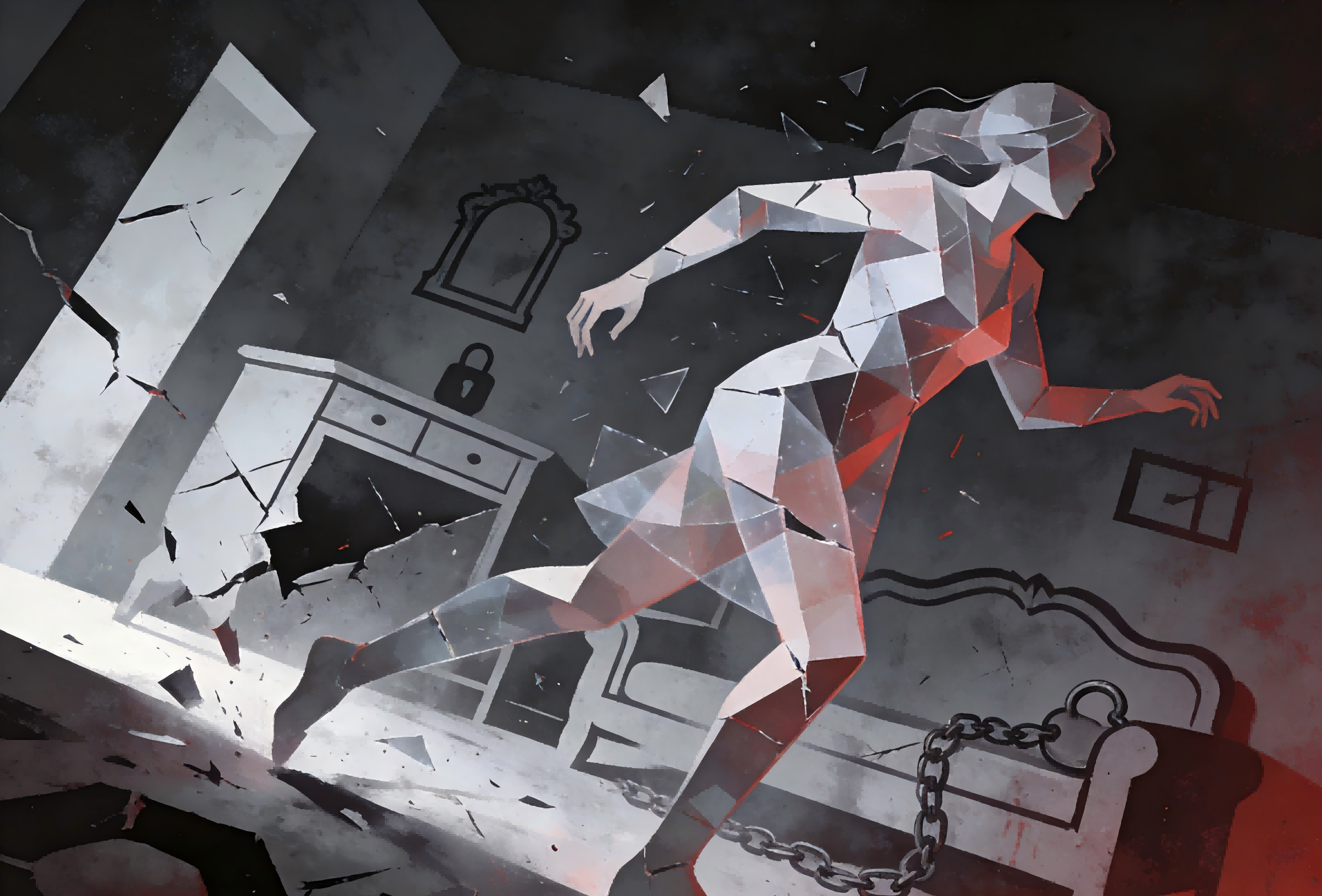
Alice Munro’s Runaway is a collection marked by an intense structural consciousness. Unlike many anthologies that simply aggregate a writer's representative works, Munro deliberately tethers eight short stories to a singular, cohesive theme: escape. As Eudora Welty observed: "[The stories] repeat themselves in all sorts of subtle ways, coming at a certain theme from different variations." In these narratives, characters flee from families or marriages, and the protagonists are almost exclusively women. Yet the outcomes of their flights are strikingly similar: they either end in tragedy or lapse into failure. At times, it is difficult to comprehend why some abandon a successful escape at the very last moment, or fall into deeper anguish after the fact. By utilizing Jacques Lacan’s concept of the objet petit a, we may find a more precise analytical path through these predicaments.
The Unattainable Beyond, the Incomplete Flight: Alice Munro’s Runaway and Lacan’s "objet petit a"
Alice Munro’s Runaway is a collection marked by an intense structural consciousness. Unlike many anthologies that simply aggregate a writer's representative works, Munro deliberately tethers eight short stories to a singular, cohesive theme: escape. As Eudora Welty observed: "[The stories] repeat themselves in all sorts of subtle ways, coming at a certain theme from different variations." In these narratives, characters flee from families or marriages, and the protagonists are almost exclusively women. Yet the outcomes of their flights are strikingly similar: they either end in tragedy or lapse into failure. At times, it is difficult to comprehend why some abandon a successful escape at the very last moment, or fall into deeper anguish after the fact. By utilizing Jacques Lacan’s concept of the objet petit a, we may find a more precise analytical path through these predicaments.
"Runaway": The Last Step Not Taken
In the title story, "Runaway," the protagonist Carla lives in a marriage with her husband, Clark, defined by oppression and indifference. Their neighbor, Sylvia, becomes her confidante. Upon learning of Carla’s desire to leave, Sylvia immediately lends her money, contacts a friend, and personally sees her onto a bus bound for Toronto. The first step of the escape is deceptively simple. However, as the bus leaves the small town—just as Carla is about to achieve the liberation many only fantasize about—she calls her husband and chooses to return to the relationship that caused her such pain. The goat, Flora, once her "bosom friend," vanishes mysteriously before Carla’s flight and reappears just as enigmatically upon her return, only to eventually be reduced to a pile of "unmissable" white bones among the weeds. Flora’s fate serves as a metaphor for Carla’s self: desired, exiled, and ultimately forsaken. Her escape is never truly consummated because the impulse to flee never found a genuine outlet.
"Tricks": Failure Behind "Success" and the Unfinished Flight
This was the first of Munro’s works I encountered, long before I knew her name or her status as a Nobel Laureate. The protagonist is Robin, a woman living in the shadow of her sister, Elspeth. Because Elspeth suffers from severe asthma, Robin is tethered to the home to care for her. Her sole luxury is an annual trip to Stratford to see a Shakespearean play. This is her first layer of escape: seeking romance in dramatic dialogue to evade the drudgery of daily life. It is during one such flight that she meets Danilo. The two share an immediate connection and agree to meet at the same spot a year later—no letters, no notices, provided Robin wears the same green dress. Only at the moment of parting do they learn each other’s names. This encounter becomes the origin of Robin’s second layer of escape: the longing to pursue pure romance and flee her family of origin and the unacknowledged burden of her sister.
However, a year later, as she stands before the agreed-upon clock shop in her green dress, she sees the man who has also kept his word—only for him to look at her coldly and slam the door in her face. Disheartened, she chooses a third layer of escape: she flees the possibility of love and romance, immersing herself in her career to become an excellent nurse and caring for her sister until the latter's death. On the surface, she is successful—she has "escaped" emotional entanglements and achieved worldly success. But years later, when she encounters a patient named Alexander who bears a striking resemblance to Danilo, she learns that the "slammed door" was merely a tragic misunderstanding involving Danilo's twin. The moment the truth is unveiled, she awakens from the facade of "success." Can she then complete a true "escape"? This is Robin’s fourth and eternally incomplete flight: escaping self-imposed guilt, escaping the fear of the cost, and escaping the hesitation inherent in the act of fleeing itself.
Why is "Escape" Destined to Fail? — A Perspective via Lacan’s objet petit a
We must ask: why do the women in Munro’s fiction repeatedly fail in their "runaway" attempts? What part of our inner being does this "escape" point toward? Lacan’s concept of the objet petit a offers an explanation. The objet petit a is not a specific missing object; rather, it is "loss itself." It is the unfillable rift within the Big Other (the symbolic order, social norms, the desire of the other) and the root of the subject’s constant movement of desire. Because of this rift, we always feel that something is missing from life, driven by an unnamable lack to search, to flee, and to pursue.
In "Runaway," Sylvia, acting as Carla’s confidante and benefactor, essentially occupies the role of the Big Other—she represents an external, idealized gaze that encourages Carla to break free from her current state. In "Tricks," Shakespearean drama serves as the Big Other, providing Robin with a template for romantic imagination and misleading her into believing that a theatrical encounter could serve as an exit from life. Throughout the book, there is an even more hidden and unified Big Other: society—that is, us, the readers, who hope the protagonists will succeed in their flight. We impose upon them the recognition that escape is the only way to mend the lack. In truth, they do not understand why they are fleeing, or they cannot accept the price that a genuine escape demands.
The objet petit a is not an object we once possessed and subsequently lost; rather, it is a constant sensation we hold as subjects—an intuition that something in life is perpetually missing. When we attempt to escape, we discover to our astonishment that this lack is irremediable. The primordial drive for flight vanishes, and we are forced to face the complex new reality following the escape—a reality that provides neither a remedy for the lack nor true consolation. Thus, we eventually abandon the flight. The void of the objet petit a can never truly be filled; therefore, "escape" can only ever be a postulate, never a salvation. The "beyond" (the other shore) is what it is precisely because it can never be reached.