A Comparison of Two Artists' Philosophies of Life in The Life and Opinions of the Tomcat Murr
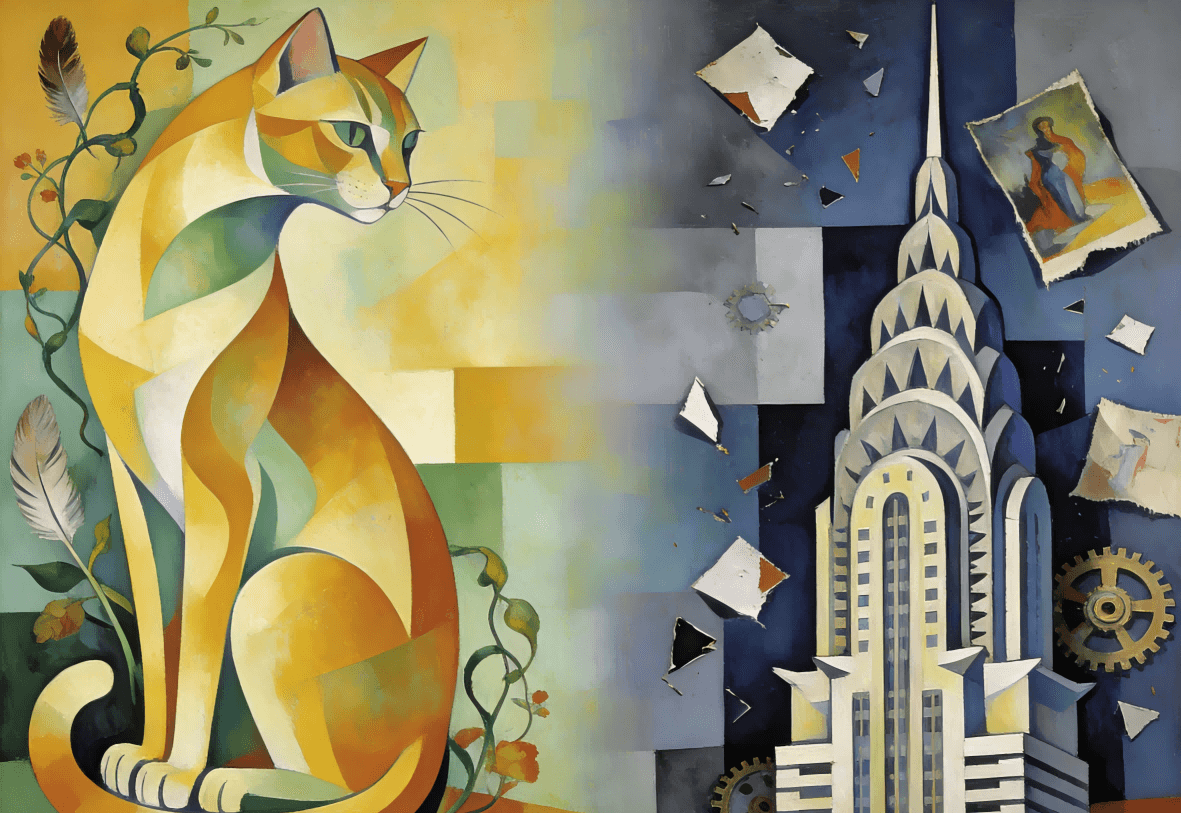
E.T.A. Hoffmann's late masterpiece, The Life and Opinions of the Tomcat Murr, features a dual narrative contrasting the tomcat Murr's humorous rise as an 'artist' with the tragic life of musician Johannes Kreisler, reflecting the artist's struggle between reality and idealism.
A Comparison of Two Artists' Philosophies of Life in The Life and Opinions of the Tomcat Murr
The Life and Opinions of the Tomcat Murr (full title: The Life and Opinions of the Tomcat Murr, together with a fragmentary Biography of Kapellmeister Johannes Kreisler on randomly recycled sheets of paper) is a late masterpiece by the German Romantic author E.T.A. Hoffmann. The novel employs a unique dual narrative structure, juxtaposing the humorous account of the tomcat Murr's rise as an "artist" with the tragic life of the musician Kreisler. These two starkly contrasting philosophies of life represent Hoffmann's profound reflection on the artist's struggle between reality and idealism.
(I) Conceptions of Art
1. Murr: Art as Play and a Tool for Self-Gratification
In Murr's view, art is not a lofty spiritual pursuit but rather a form of playful entertainment. He expresses himself through poetry and music, but his efforts remain superficial, focusing on technique and form. Murr regards art as a "pastime"—a tool for deriving pleasure and showcasing his own talents. His creations lack inner passion and spiritual depth, serving more as an imitation and embellishment of worldly life.
This artistic perspective stems from his animalistic understanding of the world: he seeks sensory satisfaction and external recognition rather than spiritual enlightenment. Consequently, Murr's "artistic achievements" resemble a successful adaptation to societal norms rather than genuine spiritual creation.
2. Kreisler: Art as an Ideal and a Spiritual Sanctuary
In stark contrast to Murr stands the musician Johannes Kreisler. For him, art is not an amusement but the very meaning of life and his spiritual home. Kreisler perceives art as a mode of existence that transcends reality, serving as his sole path to pursue ideals and express inner anguish. His music is imbued with passion and philosophical thought, becoming his weapon against a philistine world.
Kreisler's artistic view is characterized by idealism and purity. He neither creates for fame nor compromises for public approval, instead viewing art as a bridge to truth. This very conviction leads to his repeated frustrations in real life; loneliness, rootlessness, and misunderstanding become his inescapable fate.
(II) Attitudes Towards Love
1. Murr: Love as an Infatuation with Appearance
Murr's attitude towards love mirrors his artistic view: superficial and utilitarian. He experiences three love affairs in the book—with "Miesmies," "Mina," and "Minona"—each beginning with an attraction to "beautiful looks," quickly escalating into passionate love, only to just as quickly shift to a new object of affection. Murr's love lacks a spiritual dimension; it is merely an obsession with physical beauty. Consequently, his love poems are ornate yet hollow, filled with clichés, perfectly reflecting his understanding of art: flashy but empty.
2. Kreisler: Love as the Embodiment of Art
Kreisler's view of love is intrinsically linked to his artistic ideals. His love for Julia is not driven by physical instinct or worldly desire, but by reverence for beauty and inspiration. For him, true love should be directed towards the eternal spirit, not transient physicality. Love becomes the driving force and wellspring for his artistic creation, an integral part of his pursuit of an ideal world. One could say Kreisler's love is "Platonic," an extension of his artistic faith.
(III) The Tragedy of Two Worldviews and Their Implications
Murr and Kreisler represent two extreme archetypes of the artist: one is the "artist of life" who adapts to the world with worldly cynicism; the other is the "artist of the spirit" who clings to his ideals and struggles in solitude.
Murr thrives in the worldly realm but loses his artistic soul. Kreisler burns with passion for his ideals yet remains homeless in reality. Hoffmann does not prescribe which path is correct, as both meet tragic ends in the novel—Murr's "success" is hollow, while Kreisler's "profundity" is marked by loneliness.
This dichotomy mirrors our eternal dilemma between reality and idealism: should one adapt to the world or坚守 (hold fast to) one's inner convictions? Hoffmann's answer may be that only by maintaining a tension between the two extremes can one avoid the pitfalls of either. As suggested by the novel's unique dual narrative, life and art, humor and pathos, the worldly and the sublime are always intertwined and inseparable.
Conclusion
The Life and Opinions of the Tomcat Murr is not merely a satirical and elegiac portrayal of artists; it is a philosophical meditation on the human condition. Through the dual lives of Murr and Kreisler, Hoffmann reveals the profound tension between art and life, idealism and reality. It is for this reason that the work merits repeated close reading, and its innovative narrative structure and characterizations retain powerful contemporary relevance to this day.